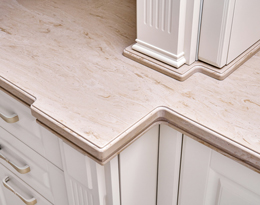
There is no single best way to protect natural stone. A dense granite countertop may need nothing more than the right cleaner. A porous stone may benefit from a penetrating sealer. Marble in a busy kitchen may need protection against both stains and etching.
The right choice comes down to the stone, where it is installed, how you use it, the look you want to preserve and how much you want to spend.
SRS can inspect your stone and recommend the best option for that particular surface. That may mean doing nothing, applying a traditional penetrating sealer or using advanced protection such as TuffSkin or a professional anti-etch coating.
Before choosing a product, call SRS for a stone-protection consultation.
Does Every Stone Countertop Need Protection?
No. Some dense granites and quartzites absorb very little moisture. A lightly used bathroom vanity or decorative tabletop may also be fine with regular cleaning and quick attention to spills.
We look at more than the name of the stone. Its porosity, finish, condition and location all matter. So does the way your household uses it. There is no reason to apply a product that will not provide a real benefit.
Traditional Penetrating Sealers
A penetrating sealer absorbs into the pores of the stone. It slows down the absorption of water, oils and other liquids, giving you more time to clean up a spill before it turns into a stain.
Sealers are commonly used on granite, quartzite, marble, limestone and travertine. Some countertops need to be sealed periodically. Others may go years without needing another application.
It is also important to understand what sealer cannot do.
A penetrating sealer helps with stains, but it does not prevent etching. Etching is a reaction between an acidic substance and acid-sensitive stone. Lemon juice, vinegar, wine, tomatoes and some household cleaners can leave dull marks on marble, limestone, travertine and onyx even when the stone is properly sealed.
If those marks are your main concern, sealer alone is probably not the answer.
TuffSkin Surface Protection
 TuffSkin is a thin protective film installed over the surface of the stone. It creates a barrier between the countertop and the spills that cause staining and etching.
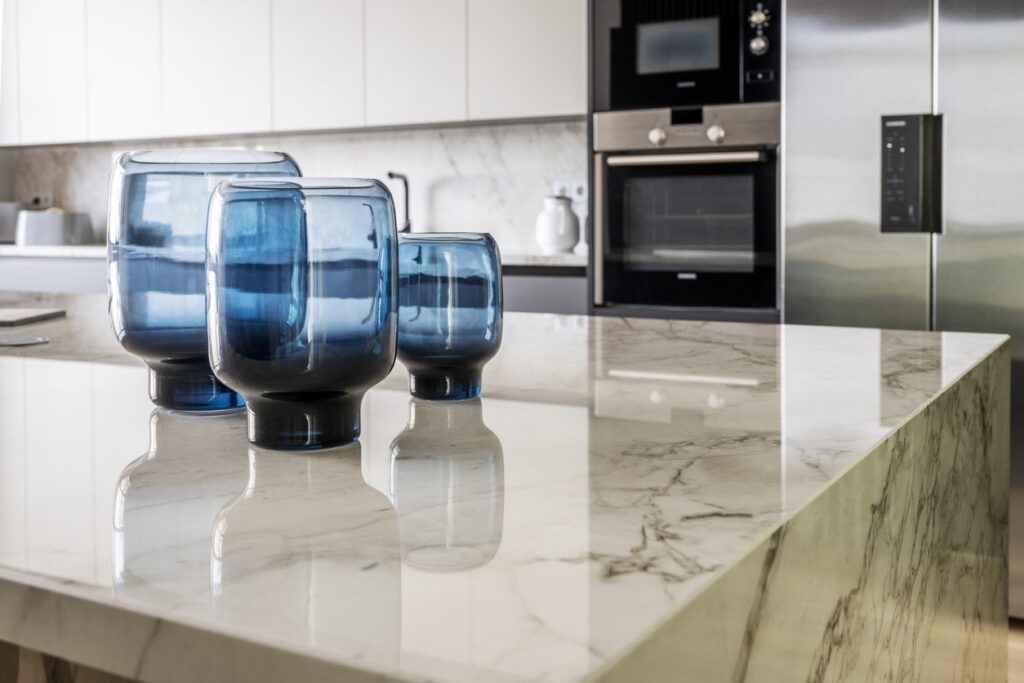
It can be a good fit for marble kitchen islands, bathroom vanities, bars, restaurant tables and other surfaces that see frequent use. It is available in finishes designed to work with polished or honed stone and can be removed and replaced when necessary.
Before recommending TuffSkin, we look closely at the countertop’s shape, seams, edges and current condition. Existing chips, cracks or damage may need to be repaired first.
Professional Anti-Etch Coatings
Anti-etch coatings are another option for marble and other acid-sensitive stones. Like TuffSkin, they prevent acidic foods and liquids from making direct contact with the stone.
These treatments can help prevent both staining and etching while preserving the appearance of the countertop. They are often considered for marble kitchens, dining surfaces, bathroom vanities and other places where spills are simply part of daily life.
Anti-etch products vary in appearance, cost, installation and maintenance. We can explain the differences and show you which options are appropriate for your stone.
Should Damaged Stone Be Restored First?
Usually, yes.
A protective treatment will not repair a deep stain, chip, crack or uneven finish. If the stone is already damaged, SRS may recommend cleaning, repairing, honing or polishing it before protection is installed.
This gives you a properly restored surface to protect, rather than covering over a problem that should have been corrected first.
So, Which Option Is Right for Your Countertop?
It depends.
A granite countertop may only need a penetrating sealer. Another surface may not need anything. Marble in a lightly used bathroom has different needs than marble on a kitchen island where people cook, eat and gather every day.
Your budget matters, too. We will help you weigh the cost of each option against the protection it provides and the amount of ongoing care it requires.
Call SRS for a Stone-Protection Consultation
You do not need to know what kind of stone you have or which product to ask for. That is what the consultation is for.
SRS will evaluate the stone, its condition, where it is installed and how you use it. We will also consider your appearance preferences, maintenance expectations and budget before making a recommendation.
The answer may be no additional treatment, a traditional penetrating sealer, TuffSkin or a professional anti-etch coating. We will explain the choices clearly and help you select the one that makes the most sense for your surface.
Call SRS to schedule your natural stone protection consultation.